 By Lucy
 There’s a mystery to women that men often romanticise.
We write poems about it. We fantasise about "figuring them out." We confuse unpredictability for magic and silence for depth. But maybe the truth is simpler.
Maybe the mystery is just humanity. The kind we were never taught to see clearly.
Most men don’t misunderstand women out of malice. It’s not always arrogance.
More often, it’s blindness. Inherited. Accidental. Unexamined.
We grow up around women, mothers, sisters, classmates, but somehow, we don’t always see them. Not as full people. Not in the way they deserve.
We see roles. Archetypes. Projections.
“The girl next door.” “The dream girl.” “The one who got away.”
We reduce them to the feelings they make us feel.
And it’s subtle. Dangerous because it’s subtle. Because we can swear we respect them while never really knowing what they’re afraid of at night.
Or how long it takes to heal from being made to feel small for having a voice that shook the room. Or what it’s like to exist in a body that people comment on without permission.
We say women are “complicated.” Maybe that’s a cop-out.
Maybe we say that because we were never taught to listen without trying to solve. To witness without reacting. To sit in the discomfort of their truth without making it about our ego.
A lot of men think strength means silence. Stoicism. The "I got this" vibe. But for many women, strength looks different. It looks like emotional labour.
Like navigating the world while constantly managing other people’s feelings. Like surviving being underestimated every day and still showing up, soft.
Still hoping. Still giving.
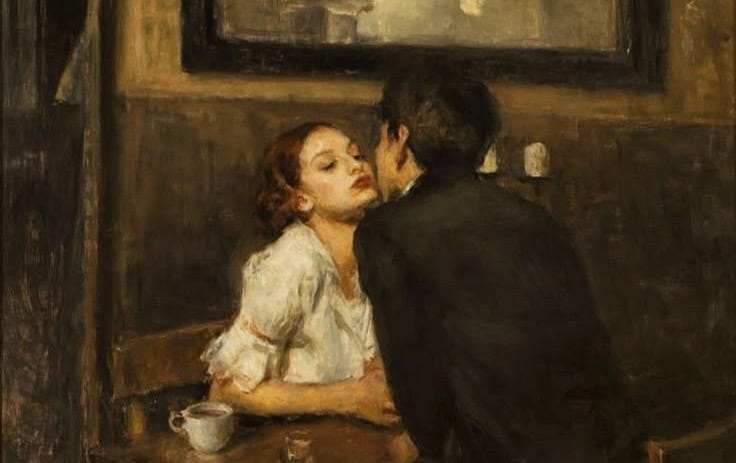
And maybe what we don’t understand, what we were never shown, is how much effort it takes to move through the world as a woman. Not just physically, but emotionally.
Mentally. Spiritually. How exhausting it is to be everything at once: beautiful but not too vain. Smart but not too loud. Caring but not clingy. Independent but still “feminine.”
We don’t understand how lonely it can be.
How often women feel like they’re too much, or not enough.
How often they shrink themselves to fit into rooms built for someone else’s comfort.
We don’t understand what it’s like to carry the weight of someone else’s fantasy. To be loved for your softness but punished for your anger. To be wanted but not understood.
To be touched but not heard.
And sometimes, we mistake their boundaries for rejection. Their independence for arrogance. Their standards for ego.
But here’s something that hit me recently: a woman is not obligated to receive your love just because you gave it. And her "no" doesn’t need to come with an apology.
She doesn’t owe you softness. She doesn’t owe you understanding just because you’re hurting.
That’s a hard one for men to sit with. We’ve been taught to see women as the balm. The redemption. The thing that’ll finally make us whole.
But she’s not here to fix you. She’s not your mother. She’s not your saviour. She’s a person. A flawed, beautiful, complex person.
And when she loves, really loves, it’s not because you earned it like a medal. It’s because she chose to. Freely. Bravely. Vulnerably.
But even that love has limits.
Especially when it’s unreciprocated. Especially when she keeps giving and giving and giving, and you keep taking, without learning her language. Without meeting her in her fears. Without seeing who she is beneath who you need her to be.
Because women are tired, too. Of being the emotional scaffolding. Of playing therapist. Of being asked to carry both her pain and yours, with grace.
She wants to be held. To be protected. Not just physically, but emotionally. Spiritually. She wants a partner, not a project.
And maybe the biggest thing men don’t understand is this:
She wants to be seen.
Not stared at. Not studied. Not “figured out.” Seen.
Seen when she’s unsure. When she’s messy. When she’s ambitious and angry and grieving and soft and all the contradictions that make her real.
Seen without being fixed.
Seen without being compared to the fantasy version you built in your head.
And if you can do that, if you can drop the script and just meet her there, in her humanness, you’ll realise she was never a mystery to solve.
She was just waiting for someone to listen long enough to hear her truth.
My father taught me to hold doors open for women. Not just for dates or family, anyone.
I remember once, we were walking through a market, and he gently pulled me back before I could rush through a door ahead of an older woman.
"Respect isn't a performance," he said. "It’s how you move when no one’s watching."
That stayed with me.
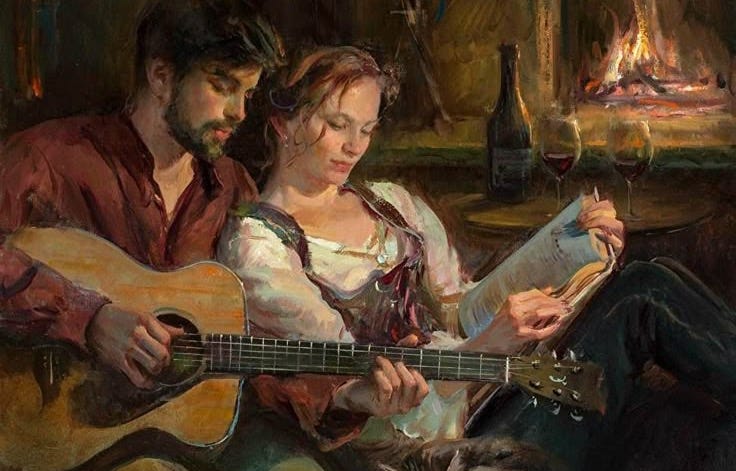
And it wasn’t just about chivalry. It was a way of moving through the world with awareness.
Of recognising the space someone else takes up and choosing not to dominate it. But the older I got, the more I realised how rare that lesson was among boys my age.
Many of them had never been told to look twice. Not in admiration, but in recognition. To see a girl not as someone to win or impress, but someone with an inner world as wild and textured as your own.
It shocked me, the jokes, the casual dismissals, the way they’d talk about women like they were either prizes or problems.
Somewhere along the way, society taught boys to conquer, not to connect. To win hearts, not understand them. And even if some of us were raised differently, we weren’t immune to the world around us.
You absorb it. You laugh along even when it feels wrong.
You let moments slide because it’s easier to be quiet than to be different. And slowly, you forget the lesson. You forget that to love someone fully, you must see them clearly.
But what does that mean, to truly see a woman? To see past the roles. Past the expectations. Past the projections.
Carl Jung once wrote, "The meeting of two personalities is like the contact of two chemical substances: if there is any reaction, both are transformed."
Yet most men are afraid of being transformed. We crave connection but resist the vulnerability it demands. We want women to open up while staying closed ourselves.
We want to be understood without offering understanding.
We want the rewards of intimacy without the responsibilities of presence.
We want her to be emotionally available without ever examining our own fears, our own silence, our own shame.
Virginia Woolf once said, “As a woman I have no country. As a woman I want no country. As a woman, my country is the whole world.”
That quote haunted me the first time I read it. Not because I understood it, but because I didn't. It forced me to confront how narrow my idea of womanhood had been, framed by media, by peer conversations, by my own immaturity.
I realised I’d been carrying around a script someone else wrote for me.
And here’s where the blindness begins. From a young age, boys are discouraged from feeling too deeply. Crying is weakness. Sensitivity is shameful. Vulnerability is mocked.
And yet, we expect these emotionally stunted boys to grow into men who can understand a woman’s interior world?
Bell hooks wrote, "The first act of violence that patriarchy demands of males is not violence toward women. Instead, patriarchy demands of all males that they engage in acts of psychic self-mutilation…"
It starts there. In silence. In the swallowing of feelings. In the disconnection from self.
Because how can a man love a woman fully if he has no practice in facing his own pain? How can he sit with her rage if he’s never made peace with his own? How can he protect her joy if he’s ashamed of his own tenderness?
We don’t need to worship women.
We don’t need to solve them. We need to sit with them. To walk beside them. To see them, not as reflections of our desires, but as lives with their own light.
And if you love her, really love her, then love her not for how she makes you feel, but for who she is when no one is watching.
Let that be the lesson we pass on.
Maybe that’s all we’re ever really asking for, on both sides. To be seen. Not for our potential. Not for our performance.
But for who we are, even in the cracks. Even in the moments that don’t shine. Even when the mask slips and all that’s left is a trembling, unguarded self.
Because beneath the noise, beneath the misunderstandings and projections, beneath all the things we were taught and all the things we never learned, there’s a simple, stubborn truth:
A woman is not a mystery to be solved.
She is not the final chapter in your hero’s journey. She is not here to complete you.
She is a world in herself.
A soul with galaxies inside. A life to be met, not conquered, not claimed, but witnessed. Fully. Quietly. Without demand.
With presence. With humility. With the kind of love that listens more than it speaks. That holds space without needing to fill it.
That doesn’t flinch when she shows anger, or ambition, or grief, or need. That doesn’t shrink when she grows.
And maybe, if we’re lucky, if we unlearn enough, if we soften enough, we’ll stop searching for the woman of our dreams.
Stop needing her to be an echo of our desires. Stop confusing her power for a threat, her independence for distance. Maybe we’ll see her, finally, not as someone who needs saving or shaping or soothing, but as someone who’s already whole.
And maybe we’ll realise that the truest form of love isn’t to stand in front of her or behind her.
But beside her.
Not to lead. Not to follow. Just to be there. Unshaken. Unafraid.
And maybe we’ll say to her, not as a line, not as a performance, but as something sacred and real:
“I know you can do it all alone. I’ve seen you. I believe you. But if you’ll let me, I’d love to just stand beside you, and adore you while you do it all.”
Because that’s what she’s been waiting for. Not a saviour. Not an audience. Just someone brave enough to stay.
Brave enough to see her, not as the dream, not as the mystery, but as she is.
Messy. Brave. Human.
And infinitely worth standing beside.
 By Lindsay Byron
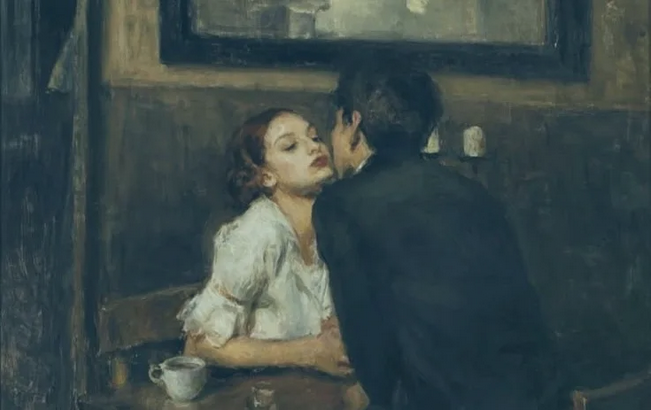
 I tried to kill myself when I was thirteen after Daddy caught me with a dick in my mouth.
But before that, me and him watched storms.
Drawn to the black clouds, we sat on the front porch, fat rain drops splashing against our legs, halfway wishing the thunder would transform into a hurricane. Inside, Mama migrated to the center of the home, crouched in a bathtub.
“You see that cloud, that real ugly one?” Daddy said. “I’m gonna paint that son of a bitch.”
Storms informed Daddy’s art.
Before us, in the front yard, the velvety leaves of the magnolia whipped in the wind. Suddenly, a crack issued from the great tree, and with a crash the magnolia dropped a branch, scattering leaves into the yard. Daddy hopped to his feet and ran to the wreckage. I joined him at his side.
“Well, I’ll be goddamned,” he said. “There’s a baby squirrel in there.”
In the pounding rain, half-hidden beneath the leaves, a tiny creature padded the ground with its paws. Around it, its mother scampered, panicked.
When the storm died down, Daddy and I went out to check on the baby, and found it still searching, eyes sealed shut and tail as thin as a cat’s. “He’s too big for his mama to carry him back to the nest,” Daddy remarked, judging the size of the baby in his hand, searching the tree for the mother who’d given up.
“Lord Jesus,” Mama sighed when Daddy brought the squirrel into our home.
While Daddy left to purchase kitten formula and a tiny bottle with which to feed our new pet, I cradled the infant on my chest. If I held him long enough, I pondered, perhaps the first time he opened his eyes, he would see me. I wanted that—wanted this baby to open his eyes and see the whole world in me. By the time Daddy returned home, I’d decided on a name.
“I’ve named him Gabriel,” I announced.
“That ain’t no name for a squirrel,” Daddy said, Marlboro balanced on his bottom lip. He took one hammer-flattened finger and scratched the animal beneath his soft chin.
“His name is Fred.”
I don’t remember my brothers getting in trouble for sex. Both of them were certainly active, my mother catching Michael on the receiving end of a blowjob in the basement one summer day; Jason chased relentlessly by school girls, indulging as he pleased. Nonetheless, I can’t recall a single screaming match or crying jag that stemmed from my brothers’ rendezvous.
The warning the world gave my brothers was this: Don’t you dare get that girl pregnant.
The warning the world gave me was this: Don’t you dare be a whore.
The dick in my mouth wasn’t my first sexual transgression.
Months earlier, Mama had caught me with a hickey on my neck after a supposed girls’ slumber party. She demanded of me, cigarette in her trembling hand, “was it everything you expected?”
“Yes,” I lied.
And he wasn’t even the first.
Before that, I’d lost my virginity to a neighborhood boy no older than me, a kid high on Christianity of the hand-waving, crying-in-church variety. Like me, he was physically precocious: a child wielding an adult’s body. We weren’t ready for ourselves, much less each other. Nonetheless, I noticed the way he watched me. Felt his eyes travel across my body.
So this is power.
I set out to abuse it.
Each bus ride to and from school, I’d cross and uncross my legs, hypnotizing him with a spell I didn’t understand, inciting within him a longing he couldn’t name. He French-kissed me at the bus stop, leaving crumbs from a PopTart on my chin. So this is love. Later, we went on a bike ride through the woods together, taking a break on a sunny patch to fumble with each other’s bodies.
Although I couldn’t imagine anything larger than a pinky inside me—and trust me, I’d tried—I nonetheless wanted this. Wanted to be grown. Wanted to be a woman. Wanted the stakes in my life to exceed tears shed over a Barbie or a heart wrapped up in a squirrel. When he fingered the button on my jeans, I welcomed the opportunity. Yet as before me he knelt, pants around his knees, I couldn’t comprehend his body—otherworldly, a stranger. Different than the flat part between Ken’s legs. Different than the drawings on the bathroom wall. Alive. Animal. I opened my knees to accept this foreigner.
I don’t remember the pain of this, my first penetration—a lack of physical suffering for which I’ve felt forever guilty.
What I do remember: the clear blue sky above me, the buzz of a mosquito in my ear. My hair pinned beneath his hand. He thrust once, twice, thrice, and four, and then leapt from me as if stung by a wasp. Turning his back to me, he shuddered into the leaves.
As I puzzled over whether this actually counted—how many seconds does it take to make sex?—he dropped his head into his hands and sunk down upon a tree stump. He curled into himself, wrapping his arms around his legs. I wanted those arms wrapped around me.
From within the fortress he’d built of his body, I heard a hiccup. A sob. Weeping.
“What’s the matter?” I asked.
“I’ve betrayed my earthly father,” he answered, “and I’ve betrayed my heavenly father, as well.”
I’d shuddered nothing into the leaves. Of course, no girl had any such right. But what about his arms around me afterward? Did I stand to gain nothing from this dance in the dirt?
Instead, I was a poison potent enough to offend both man and God.
“Get on your bike,” I spat. “We’re going home.”
When I was five, my mama gave me my first diary. That year, I would begin a chronicle of my youth that would stretch into adulthood that had at the heart of every entry my obsessions with a revolving door of boys, the greatest goal of my life, gaining their favor.
As grade school turned into junior high, Mama taught me how to achieve beauty.
Taking me in the bathroom, sitting me on the counter, pulling my shirt over my head, she’d inform me that my breasts, while small, would have a nice shape—and my eyes—dark serious pools of mahogany—would cast spells. “It’s in the blood,” Mama told me, a black magic charm, a natural born legacy. As puberty rounded the corner, turning the flat plains of my body into a fraught territory of mountains and caves that terrified and thrilled us both, Mama trained me on how best to weaponize my assets.
“What’s that boy you like, the one from Forest Hills?” she asked, as she plucked hairs from my brows, tears popping into my eyes. “You’ll get his attention now.”
At thirteen, my latest obsession was a prominent member of the Danville gentry, a boy whose pedigree deemed him desirable by the tastemakers of John M. Langston Junior High. I wonder now—when those kids’ parents purchased their nice homes along the tree-lined streets well out of the view of Evil Land’s smokestacks, did they understand the extent of what they were buying for their children?
I hated my folks for moving us to the county. Our phone number revealed our lesser station. Anybody giving out digits beginning in 822- had good reason to be ashamed.
“Can you at least put me in dance?” I begged Mama, knowing full well that all the best-liked girls in Danville attended Martha Folke’s Dance Academy.
“Absolutely not.”
Dance was for the good families—
And we hated the good families.
However, after my Forest Hills crush held my hand in the hallway at school, my stock began to rise. I started receiving invitations to birthday parties I’d never known existed. It felt good to belong. I would do whatever it took to solidify my new station.
And so, as I knelt before that boy on that fateful afternoon, I was determined to secure his continuing admiration.
But suddenly, the bedroom door slammed open.
And there—stood Daddy.
That face that had smiled so sweetly upon an orphaned squirrel, those eyes that had danced with pride at my artistic strivings—now closed into one hard line. There were no words, only disgust.
Palpable.
His little girl?
No.
That was the moment I lost him.
I scrambled to my feet—but there was no hiding what I’d done.
Daddy lunged into my room and grabbed my boyfriend by the shoulders. He dragged him down the stairs and kicked him square in the ass out the door.
I loved this boy whose dick I’d been sucking. I was sucking his dick for love. Of all the boys who’d touched me in my thirteenth year, only this one had the bravery to call me his, only this one was willing to hold the hand of a nobody from the 822. As from my bedroom window, I watched my father drive that boy from our home back to the good neighborhood, my heart dropped. I’ll never see him again. They’ll take him away from me. I fancied us a modern Romeo and Juliet, with a vast and forbidden love whose forced dissolution would lead us both to death.
But it only led one of us to death.
“Don’t you dare get that girl pregnant,” my boyfriend’s mother warned him when my daddy arrived with her son. She took away his phone privileges for a week.
At home, I found a different type of punishment awaiting me.
“You were giving him a blowjob, weren’t you?” Mama flicked her cigarette hard, ash landing on the floor, every inch of her furious.
“You will never see him again. You will never have another boyfriend again. You will never leave your room again. You will never be happy again.”
I knew I’d taken it too far. Yet I didn’t know where to stop. I didn’t know where the good seduction ended, the stuff that got you loved—and the bad seduction began, the stuff that got you hated. Why did we pluck my eyebrows if not for this success?
“You’re crying?” she asked. “Good. You should be crying.”
And then—Daddy reentered our home.
I looked to him. This man who plastered my name across walls. This man who spoke to the birds. This beloved daddy who unbeknownst to any of us had only three years left to live. I looked to him to intervene.
And he—looked away.
“I never wanted a whore for a daughter,” he said, as he walked back out our door.
I rummaged in the kitchen cabinets until I found a bottle of sleeping pills.
I poured myself a large glass of Mama’s sweet tea.
I sat on my bed and emptied the pills into my palm, munching mouthfuls like candy.
Next, I penned a garbled suicide note that pleaded for absolution from everybody from Jesus, to my parents, to Fred the squirrel.
Most of what happens next is fuzzy. I wrote my boyfriend’s initials across my stomach. I painted my face—blue eye shadow, red lipstick, streaks of pink across my cheeks. Too much. Too much of everything. I am too much of everything and I am the only girl in the world sucking dick.
And then: the weight of sleep upon me, a blanket by the fire on a snowy day, irresistible. Sinking in. How easy it is to die.
Sometime afterward, Mama rushed into my room. She would later say she was compelled by a magical force to scale the stairs with a speed not her own, to pop the lock with a strength not hers. When she threw the door open at last and found me lifeless on the bed with a suicide letter by my side, she bellowed, long and low, David!
As the ambulance sped through my neighborhood, a friend of mine followed along. She arrived at my home to find me strapped to a board, head lolling, carried on the shoulders of men in uniform.
“Is she going to be okay?” she asked a paramedic.
“No,” he replied, loading me in.
My daddy stood on the steps, this friend would later tell me, frozen and silent, my suicide note folded in his hand. When she asked him what had happened, he could only answer,
“She’s sick. She’s sick.”
Hours later I awoke, strapped to a hospital bed, lurching black sludge all over Granny Audrey’s dress as she waited by my bedside for signs of life.
“I have to pee!” I yelled between fits of vomiting.
“That’s been taken care of,” a nurse advised me.
I had been catheterized.
My stomach had been pumped.
I had been strapped down.
I lived.
I survived.
What humiliation.
I was locked in the psych ward for a week, making paper flowers and drawing hand turkeys and smoking cigarettes handed out by orderlies. I asked Jesus to save me from what awaited when I returned home—the wrath of my parents, the prying eyes of my peers, the fall from the esteem I’d so briefly enjoyed. What boy would ever hold my hand in the hallway now?
When I returned home, Mama wouldn’t look at me. Daddy stopped writing my name. But they never stopped attending my brothers’ baseball games. Why was I alone so wholly untouchable? I never asked. I was learning the order of things.
At school, the Algebra teacher advised my classmates to refrain from indulging me. “This is attention-seeking behavior,” she warned. In the hallway, boys elbowed one another when I passed, laughing. The girls drove their eyes to the floor. “Mother says you can’t come to our house anymore.”
I had only wanted to belong, but instead I had turned myself invisible.
I decided then: I will turn this scarlet letter into a rifle on my shoulder.
And listen—I was devoted. I won’t beg for love. I don’t need my daddy. I don’t need my mama. I don’t need a friend, not a single one. All those years practicing tragedy had prepared me for this moment. I’ll be your whore. I’ll be your whore in vibrant colors all across this shitty town. Pour into me everything you hate about you. I accept it. I want it. I know now who I am.
As soon as it was legal, I hit the strip club stage.
This is an excerpt from my memoir, Too Pretty To Be Good.
I was inspired to share this story by the raw and beautiful storytelling over at Postcards From a Whore
Thank you for reading. If you enjoy my work, please consider a paying Substack subscription to support my work as an author. I am currently feverishly writing Season Two of my (yes, award-winning) true crime docudrama podcast, Hookergate. Give Season One a listen. It’s different than every other true crime podcast out there.
 By Lucy
 Resources provided by BBC Action Line please check their own site for updates.
Child Sexual Abuse (Current or Historical)
Phone: 0800 1111
Phone: 0808 801 0331
Phone: 0808 800 5000 (24/7)
is available for anyone struggling to cope and provide a safe place to talk 24 hours a day.
Phone: 116 123
Visit the Samaritans websitePhone: 08088 01 03 40
Phone: 0800 980 1958
Phone: 0808 16 89 111 (24/7)
Visit the Victim Support website
Phone: 028 9024 3133
Visit the Victim Support North NI website
Phone: 0800 160 1985
Visit the Victim Support Scotland website
Adult Sexual Abuse (Current or Historical)
Phone: 0808 500 2222
Phone: 0808 801 03 02
Visit the Rape Crisis Scotland website
NHS Sexual Assault Referral Centres:
England & Wales - Visit the NHS website for England & Wales
Scotland - The NHS Scotland sexual assault self-referral phone service can help to arrange care for you in the days following a rape or sexual assault. The service may be able to arrange for you to have a forensic medical examination (FME) at a SARCS without making a report to the police.
Phone 0800 389 4424
Phone: 0808 802 1414 (24/7)
Phone: 0808 800 5005
Text: 07860 065187
Webchat available via the website.
Phone: 0808 801 0818
Visit the Survivors Trust website
Visit the Survivors UK website
Phone: 116 123
Phone: 08088 01 03 40
Phone: 0808 16 89 111 (24/7)
Visit the Victim Support website
Phone: 028 9024 3133
Visit the Victim Support North NI website
Phone: 0800 160 1985
Visit the Victim Support Scotland website
Victims of Crime - If you, or someone you know, have been a victim of crime, the following organisations may be able to help. Some of these organisations may refer to other support services that the BBC has not necessarily verified.
Victim Support provides emotional and practical help to victims or witnesses of any crime, whether or not it has been reported to the police.
Visit the Victim Support website
Visit the Victim Support North NI website
Visit the Victim Support Scotland website
Drink Spiking - The Sexual Offences Act 2003 states that it is an offence to administer a substance, to a person with intent to overpower that person to enable sexual activity with them. It is punishable by up to 10 years imprisonment. This means that slipping alcohol or drugs into someone’s drink is against the law, even if the drink is not consumed or the person is not harmed. The same would be true of needle spiking which would also be a physical assault.
Phone: 0300 123 6600
On Line Harassment
Get Safe Online offers unbiased, factual and easy-to-understand information on online safety, including advice for parents about safeguarding children online.
Visit the Get Safe Online website
UK Safer Internet Centre provides e-safety tips, advice and resources to help children and young people stay safe on the internet.
Webchat available.
If you’re aged 25 or under, and are experiencing a personal crisis, such as suicidal thoughts, abuse or assault, you can text THEMIX to 85258.
Phone: 0808 808 4994
Murder and Manslaughter
Support after Murder and Manslaughter offers understanding and support to families and friends who have been bereaved as a result of murder or manslaughter, through the mutual support of others who have suffered a similar tragedy. Details of pop-up cafes and forums are available via their website.
Phone: 0121 472 2912
Text: 07342 888570
Revenge Porn
The Revenge Porn Helpline provides advice, guidance and support to victims of intimate image abuse over the age of 18, who live in the UK.
Phone: 0345 600 0459
Visit the Revenge Porn Helpline website
Stalking
The National Stalking Helpline, run by the Suzy Lamplugh Trust, provides information and guidance to anyone who has been affected by stalking.
Phone: 0808 802 0300
Visit the Suzy Lamplugh Trust Website
Sextortion
‘Sextortion' is the short name for 'financially motivated sexual extortion’. It is a type of online blackmail where criminals threaten to share sexual pictures, videos, or information about you. They may be trying to take money from you or forcing you to do something else you don’t want to.
Anyone can be a victim of sextortion. However, young people aged between 15 to 17, and adults aged under 30 are often most at risk.
Visit the National Crime Agency website for help and advice.
By Lucy
All HTML headings, <h1> through <h6>, are available.
| Heading | Example |
|---|---|
|
|
h1. Bootstrap heading |
|
|
h2. Bootstrap heading |
|
|
h3. Bootstrap heading |
|
|
h4. Bootstrap heading |
|
|
h5. Bootstrap heading |
|
|
h6. Bootstrap heading |
.h1 through .h6 classes are also available, for when you want to match the font styling of a heading but cannot use the associated HTML element.
h1. Bootstrap heading
h2. Bootstrap heading
h3. Bootstrap heading
h4. Bootstrap heading
h5. Bootstrap heading
h6. Bootstrap heading
Use the included utility classes to recreate the small secondary heading text from Bootstrap 3.
Traditional heading elements are designed to work best in the meat of your page content. When you need a heading to stand out, consider using a display heading—a larger, slightly more opinionated heading style.
| Display 1 |
| Display 2 |
| Display 3 |
| Display 4 |
Make a paragraph stand out by adding .lead.
Vivamus sagittis lacus vel augue laoreet rutrum faucibus dolor auctor. Duis mollis, est non commodo luctus.
Styling for common inline HTML5 elements.
You can use the mark tag to highlight text.
This line of text is meant to be treated as deleted text.
This line of text is meant to be treated as no longer accurate.
This line of text is meant to be treated as an addition to the document.
This line of text will render as underlined
This line of text is meant to be treated as fine print.
This line rendered as bold text.
This line rendered as italicized text.
.mark and .small classes are also available to apply the same styles as <mark> and <small> while avoiding any unwanted semantic implications that the tags would bring.
While not shown above, feel free to use <b> and <i> in HTML5. <b> is meant to highlight words or phrases without conveying additional importance while <i> is mostly for voice, technical terms, etc.
Change text alignment, transform, style, weight, and color with our text utilities and color utilities.
Stylized implementation of HTML’s <abbr> element for abbreviations and acronyms to show the expanded version on hover. Abbreviations have a default underline and gain a help cursor to provide additional context on hover and to users of assistive technologies.
Add .initialism to an abbreviation for a slightly smaller font-size.
attr
HTML
For quoting blocks of content from another source within your document. Wrap <blockquote class="blockquote"> around any HTML as the quote.
Lorem ipsum dolor sit amet, consectetur adipiscing elit. Integer posuere erat a ante.
Add a <footer class="blockquote-footer"> for identifying the source. Wrap the name of the source work in <cite>.
Lorem ipsum dolor sit amet, consectetur adipiscing elit. Integer posuere erat a ante.
Use text utilities as needed to change the alignment of your blockquote.
Lorem ipsum dolor sit amet, consectetur adipiscing elit. Integer posuere erat a ante.
Lorem ipsum dolor sit amet, consectetur adipiscing elit. Integer posuere erat a ante.
Remove the default list-style and left margin on list items (immediate children only). This only applies to immediate children list items, meaning you will need to add the class for any nested lists as well.
Remove a list’s bullets and apply some light margin with a combination of two classes, .list-inline and .list-inline-item.
Align terms and descriptions horizontally by using our grid system’s predefined classes (or semantic mixins). For longer terms, you can optionally add a .text-truncate class to truncate the text with an ellipsis.
Vestibulum id ligula porta felis euismod semper eget lacinia odio sem nec elit.
Donec id elit non mi porta gravida at eget metus.
Responsive typography refers to scaling text and components by simply adjusting the root element’s font-size within a series of media queries. Bootstrap doesn’t do this for you, but it’s fairly easy to add if you need it.
Here’s an example of it in practice. Choose whatever font-sizes and media queries you wish.
Easily realign text to components with text alignment classes.
Ambitioni dedisse scripsisse iudicaretur. Cras mattis iudicium purus sit amet fermentum. Donec sed odio operae, eu vulputate felis rhoncus. Praeterea iter est quasdam res quas ex communi. At nos hinc posthac, sitientis piros Afros. Petierunt uti sibi concilium totius Galliae in diem certam indicere. Cras mattis iudicium purus sit amet fermentum.
For left, right, and center alignment, responsive classes are available that use the same viewport width breakpoints as the grid system.
Left aligned text on all viewport sizes.
Center aligned text on all viewport sizes.
Right aligned text on all viewport sizes.
Left aligned text on viewports sized SM (small) or wider.
Left aligned text on viewports sized MD (medium) or wider.
Left aligned text on viewports sized LG (large) or wider.
Left aligned text on viewports sized XL (extra-large) or wider.
Prevent text from wrapping with a .text-nowrap class.
For longer content, you can add a .text-truncate class to truncate the text with an ellipsis. Requires display: inline-block or display: block.
Transform text in components with text capitalization classes.
Lowercased text.
Uppercased text.
CapiTaliZed text.
Note how text-capitalize only changes the first letter of each word, leaving the case of any other letters unaffected.
Quickly change the weight (boldness) of text or italicize text.
Bold text.
Normal weight text.
Light weight text.
Italic text.
.text-primary
.text-secondary
.text-success
.text-danger
.text-warning
.text-info
.text-light
.text-dark
.text-muted
.text-white
Contextual text classes also work well on anchors with the provided hover and focus states. Note that the .text-white and .text-muted class has no link styling.
Similar to the contextual text color classes, easily set the background of an element to any contextual class. Anchor components will darken on hover, just like the text classes. Background utilities do not set color, so in some cases you’ll want to use .text-* utilities.
Sometimes contextual classes cannot be applied due to the specificity of another selector. In some cases, a sufficient workaround is to wrap your element’s content in a <div> with the class.
Using color to add meaning only provides a visual indication, which will not be conveyed to users of assistive technologies – such as screen readers. Ensure that information denoted by the color is either obvious from the content itself (e.g. the visible text), or is included through alternative means, such as additional text hidden with the .sr-only class.